
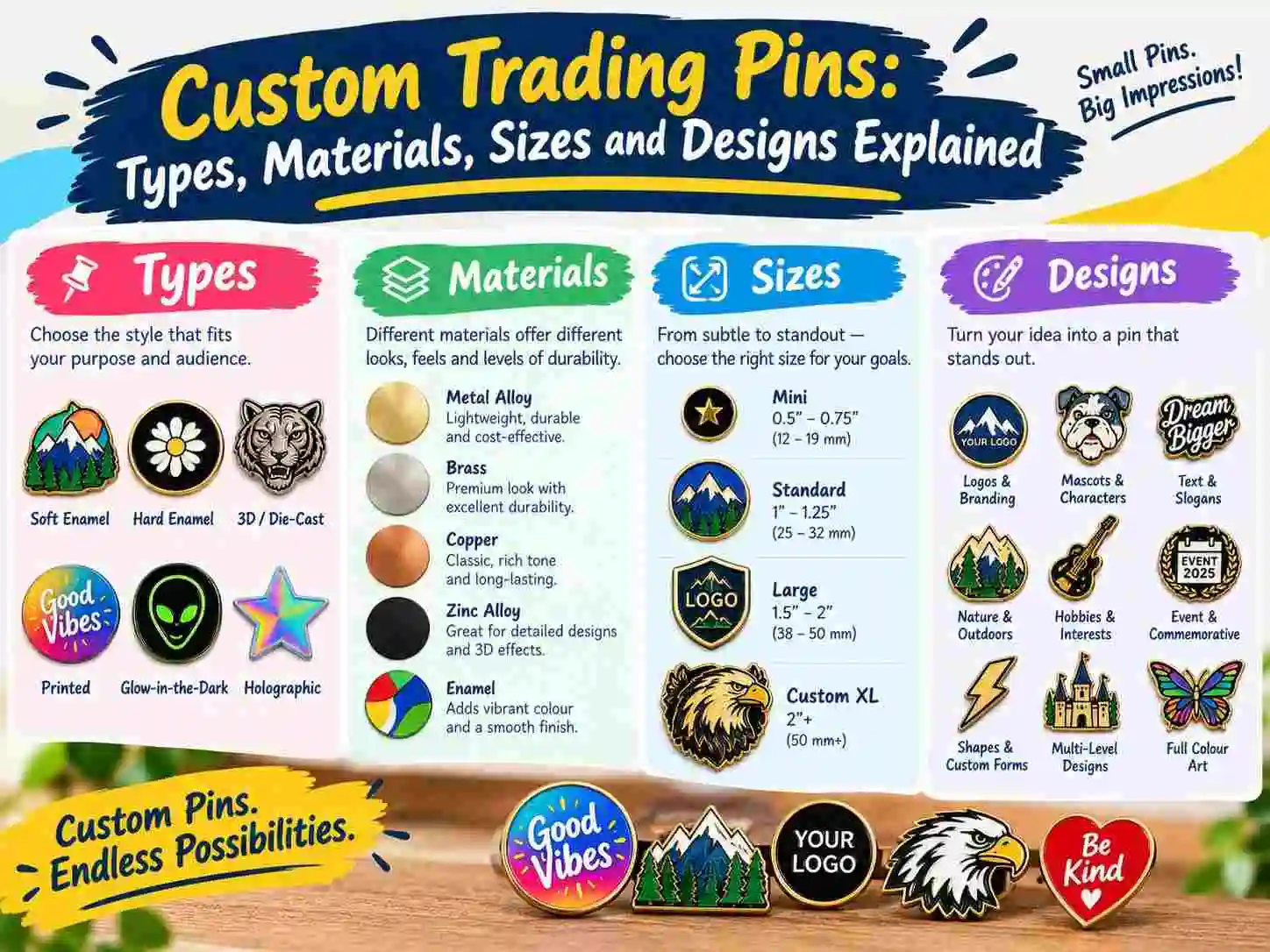
Custom Trading Pins: Types, Materials, Sizes and Designs Explained
Custom trading pins are the small metal pins teams design and trade at youth sports tournaments, mostly in baseball and softball. Every team shows up with their own version, usually built around a mascot, team colours, or a number tied to the season. Players swap them with other teams before or after games, and by the end of a weekend tournament, a lanyard full of pins says a lot about who was there.
Getting the design right matters more than people expect going in. A pin that looks great on screen can fall apart once it’s small, sitting on someone’s jersey, or handled by dozens of kids over two days. This guide breaks down the materials, sizes, and design choices that actually hold up in that setting.
Good Pins Start With Three Basics
Size, material, and design carry a trading pin from concept to something worth trading. Skip one and the pin looks fine on a screen but falls apart once it’s small in someone’s hand.
What a Pin Needs to Survive a Tournament
Trading pins for tournaments get passed between players, clipped onto hats, and swapped fast between games. Before any colours or add-ons get picked, a pin needs to cover three things:
- Enough size to hold real detail without crowding
- Metal strong enough to survive constant handling
- Artwork simple enough to read in a few seconds
Glitter accents or a spinning piece can make a pin stand out, but none of that helps if the base design is cluttered or the metal bends after one trade session. Get the basics right first, then build the personality on top.
Five Styles Cover Most Trading Pins
Custom trading pins come in a handful of styles, and each one changes how the final pin looks and feels once it’s made. Picking the right one depends on the design, not personal preference alone.
Soft Enamel
Colours sit in recessed sections with the metal edges raised above them, giving the pin a slight texture. This is the most common style for team pins because it’s affordable and handles bold logos well.
Hard Enamel
The enamel gets polished flush with the metal, so the surface feels smooth and glass-like. It costs more than soft enamel but gives colours a sharper, more finished look.
Digital Print
Full-colour artwork gets printed directly onto the metal and sealed under a clear coating. This works best for designs with gradients, photos, or fine detail that enamel can’t reproduce.
3D Cast
The design gets moulded into raised, sculpted metal instead of filled with colour. Mascots and team logos often look better in this style since the depth adds character.
Action Pins
Spinners, danglers, and glitter accents turn a flat pin into something interactive, which is exactly why these tend to get traded first.
Metal Choice Decides Durability
Custom trading pins are made from a base metal before any colour or coating gets added, and that choice affects how well the pin survives a season of trading.
Iron and Copper
These metals get die-struck into shape, which works well for standard pin outlines like circles, shields, or classic team crests. They’re sturdy, affordable, and hold sharp lines without adding much cost to the order.
Zinc Alloy
This metal gets die-cast instead of struck, which allows for cutouts, layered shapes, and heavier 3D designs. It costs a bit more but handles intricate mascots or unusual pin outlines far better than iron or copper can.
Either option lasts through regular handling. The real decision comes down to how detailed or unusual the pin shape needs to be.
Size Affects Every Design Choice
Most custom trading pins fall between 1.75 and 2.25 inches, and that range isn’t random. It’s the size that gives a mascot, team name, and any add-on enough room without making the pin too heavy to wear comfortably.
Under 1.5 Inches
Fine lines and small text start to blur at this size. A detailed logo that looks sharp on a screen often turns into a muddy shape once it’s stamped that small.
1.75 to 2.25 Inches
This range holds detail well while staying light enough for a lanyard. It’s also the standard size teams expect when trading, which makes pins outside that range feel off during a swap.
Trading Pin Backing Types
The backing decides whether a pin stays put on a jersey, hat, or lanyard, and picking the wrong one causes more lost pins than any design flaw. Knowing the common trading pin backing types makes this an easy decision instead of an afterthought.
Butterfly Clutch
A metal clasp that locks the pin post in place with a simple twist. It’s secure and easy for kids to attach on their own, which makes it the standard choice for most trading pins.
Rubber Clutch
A soft rubber backing that pushes onto the pin post. It goes on faster than a butterfly clutch but can loosen over time with repeated removal, so it works best for pins that stay on a lanyard rather than getting swapped often.
Safety Pin
A hinged pin backing that clips through fabric directly. This style suits trading pins meant for quick display rather than long-term wear, since it holds less securely during active movement.
Simple Design Choices Work Best
A pin can have great artwork and still get passed over at a tournament table if it’s hard to read or feels flimsy in hand. A few design choices make the difference between a pin players want and one that sits in a box.
Keep Text Bold
Small, thin lettering disappears fast once a pin is scaled down to actual size. Team names, numbers, or years should use thick, simple fonts that stay readable from a short distance.
Use Strong Contrast
Colours that sit close together on the pin tend to blend once the piece is small. Pairing dark and light tones, or contrasting team colours directly, keeps the design sharp even in a crowded lanyard.
Connect Every Piece
Design elements need to stay physically linked through the metal. A few things to check before finalising artwork:
- No floating letters or shapes with no connection point
- Thin sections reinforced so they don’t bend during handling
- Outlines closed rather than left open at any edge
These details matter most at trading pins for tournaments, where pins get handled constantly and a weak spot shows up fast.
Final Thought
Getting a trading pin right comes down to a few practical choices, not one big creative leap. The material decides how it holds up, the size decides how much detail it can carry, and the backing decides whether it stays on through a full day of games. None of these choices needs to be complicated, but skipping any of them shows up fast once the pin is actually in use.
Custom trading pins work best when function comes first and personality gets built on top of that. Get the basics right, and the design part becomes a lot easier to enjoy.
Common Questions About Trading Pins
Q/A: How do you design a trading pin?
Start with a clear focal point like a team mascot, logo, or bold team name, then add details like location, division, or tournament year. Keep the size between 1.75 and 2.25 inches so the design stays readable, and add interactive touches like spinners or danglers if you want the pin to stand out during trades.
Q/A: What is the best size for a trading pin?
Most custom trading pins fall between 1.75 and 2.25 inches. This range gives enough room for a mascot, text, and any add-ons without making the pin too heavy or bulky to wear on a lanyard.
Q/A: Why are enamel pins expensive?
Each design needs its own custom metal mould before production starts, and the enamel gets filled by hand or baked and polished in multiple rounds. Smaller batch orders also raise the per-unit cost compared to large factory runs.
Q/A: What’s the difference between soft enamel and hard enamel pins?
Soft enamel has a slightly textured feel with the metal lines raised above the colour. Hard enamel gets polished flat and smooth, giving it a more finished, jewellery-like look. Soft enamel tends to be the more budget-friendly and common choice for trading pins.
Q/A: How many trading pins should a team order?
Most teams order enough pins for each player to trade several times across a tournament, often 25 to 50 pins per player depending on the length of the event and how many teams they expect to trade with.

I am a professional blog writer at pinbadges.com.au. I love to cover custom pin design trends, corporate branding tips, and the craftsmanship behind lapel pins, hat pins, and challenge coins. I enjoy writing about how small accessories can make a big impact for brands, teams, and events across Australia. In my free time, I explore local design studios and keep up with the latest in custom merchandise trends.