
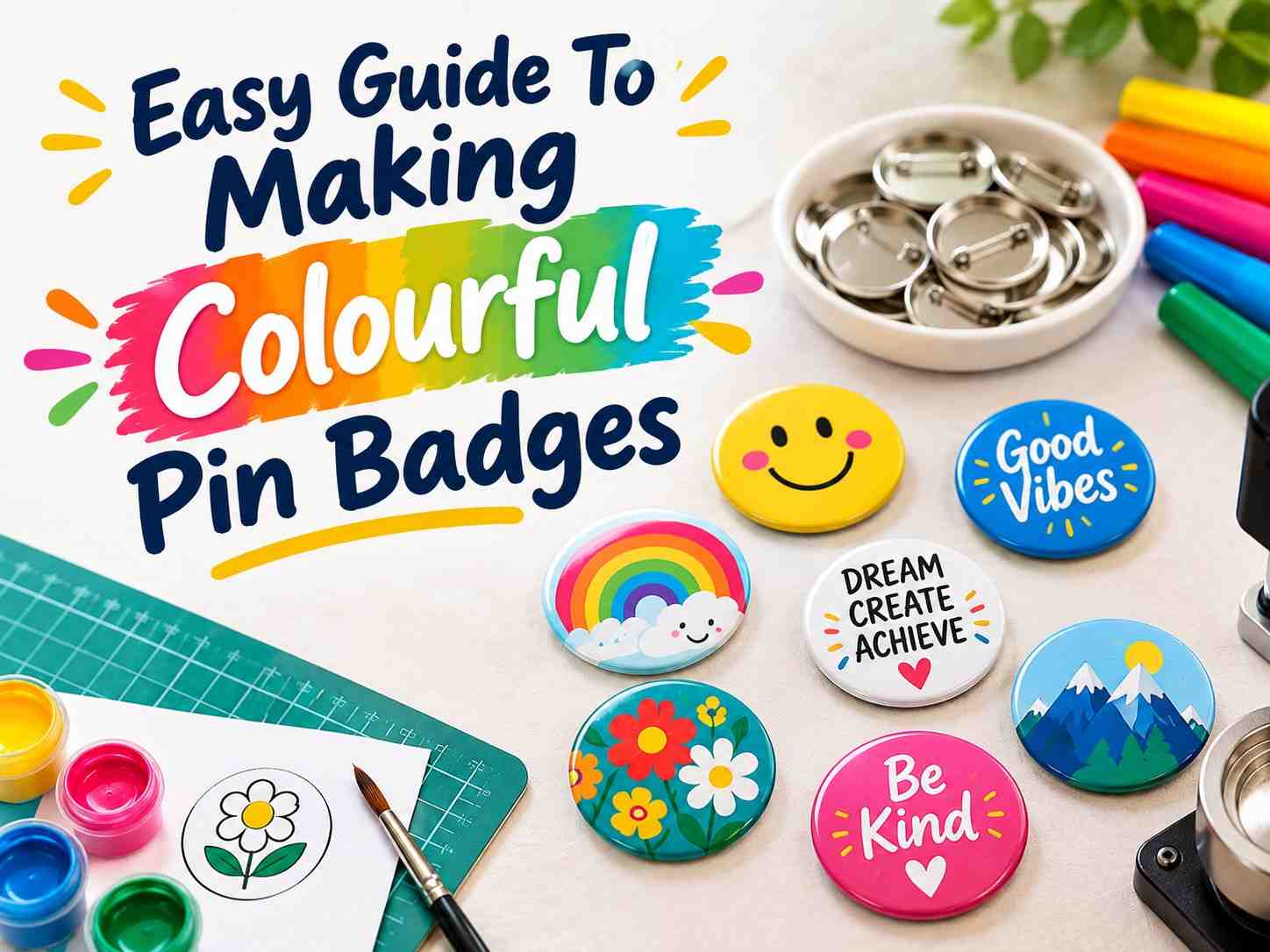
Easy Guide To Making Colourful Pin Badges
What makes coloured lapel pins appealing? Thoughtful colour choices, minimalist designs, durable construction, and precision in production can make a badge stand out as a great accessory for brands, organisations, special events, and creative projects.
Adding colour to jackets, backpacks, or jeans bags helps turn routine clothing items into unique fashion looks.
Creating Colourful Pin Badges at home is a great way to showcase your creativity or organise community events without having to spend too much money.
Even though creating durable items can appear to be a difficult process, dividing it into several steps will make your projects easy, quick, and highly satisfying.
Knowing the right techniques ensures that all your creations will be strong, colourful, and wearable for many years.
Choose Materials That Create Better Badges
The type of material influences both the look and strength of the pin badge. Metal is often chosen since it offers a sturdy foundation and enables the creation of intricate designs with clean outlines.
Before production starts, it is always good to know What Materials are used for custom badges. These may include metal bases, enamel, printing surfaces, plastic parts, and a variety of backings. Choosing the best depends on the design, use, budget, and desired finish.
A Custom badge maker can suggest appropriate materials depending on the type of design and the way that the badge will be used. A badge that is to be worn outside regularly will need different materials than an indoor badge.
Select Colours That Strengthen Visual Appeal
Colour is the very first thing that anyone sees when looking at a badge. Effective use of colour allows you to recognise artwork and emphasise certain design elements.
Colours must suit the artwork, not just be added for aesthetic reasons. An excess of colours can crowd a small badge, particularly if it features text or intricate artwork.
The Custom Badge Maker will help you choose colours that are appropriate for your badge depending on its size. In addition, colours must be approved based on how they look as printed, and enamel finishes may produce slightly different visual results.
Prepare Artwork For Cleaner Badge Results
Artwork gives a good foundation for making a badge. The design should still be clear when scaled down to its correct badge size.
Smaller font size, thinner lines, and highly detailed shapes could pose problems in reproducing the design because it will be difficult to produce these details on a small area. In fact, the removal of unimportant details may enhance the design without altering its basic concept.
It is also necessary that the design has clear colour blocks and distinct edges since this would help the production crew in comprehending how the artwork is supposed to look.
A custom badge maker can ask for an appropriate file containing the design before offering a production proof. Proof checking enables one to examine the colours, dimensions, placement, and balance of the artwork.
Match Badge Shapes To The Design
Badge shapes may affect the presentation of the artwork. Round shapes are popular; however, custom shapes will enhance the visual association between the badge and the logo, symbol, character, or artwork.
Design should fit into the shape rather than complicate the overall idea. Although an intricate outline will add more to the appeal of a badge, it might complicate its manufacturing process and influence the placement of small details.
When determining what Materials are used for custom badges, the design selected and the manufacturing process are equally important considerations, since certain materials will suit particular shapes.
Understand Differences Between Badge Types
There are various types of badges that cater to different purposes. A promotional badge that uses bright colours would place emphasis on branding and design, whereas a name badge should contain information that is easy to read.
Understanding the difference between a custom badge vs name badge can help organisations choose the appropriate type. A custom badge places an emphasis on branding, logo, artistry, campaign, team, or decoration, whereas the name badge aims at identifying a particular individual.
This difference should influence the design of each of the two types. While name badges need readable text and room for an individual’s name or position, custom badges should be colourful and attention-grabbing.
Select Production Methods For Consistent Quality
The production process might influence the appearance of colours, lines, textures, and finishes. Enamel badges, printed badges, embossed badges, and other kinds of badges have distinct appearances.
The production technique has to be chosen in relation to the artwork and the finish needed. An artwork that has strong coloured areas may be suitable for an enamel production technique, whereas a photographic artwork can be suitable for printing.
Before the actual process of production starts, it is important to ensure that the artwork fits with the chosen technique.
Improve Badge Quality Through Careful Finishing
The last stage of finishing may alter the feel and look of the brightly coloured pin badge. The type of metal finishing, the surface texture, coating, and the type of backing can affect the final outcome of the badge.
Metal finishing may provide a neat look to the badge. On the other hand, there may be other finishing options, which can help in creating an elegant and traditional look to the pin. It is also important that the type of backing is appropriate for the use of the pin badge.
The choice between custom badge vs name badge also affects the finishing. The decorative custom badge focuses more on its look, whereas the name badge requires a practical attachment system that supports frequent use.
Conclusion
Creating beautiful pin badges entails making the right decisions all through the process. The materials form the basis for creating the badge, while colours, artwork, shape, size, production process, and finish contribute to the look of the badge.
The design must be identifiable even at the original size, while the material used should be appropriate for the intended use of the badge. A clear understanding of the distinction between decorative custom badges and name badges for identification purposes may also assist in making better design decisions.
A professional custom badge maker can also make technical decisions easier and more reliable. Through proper artwork creation, selection of appropriate materials, good colour balance, and proper quality control measures, colourful pin badges can be transformed into beautiful and functional products.
Frequently Asked Questions
Q/A: Which materials are used to create colourful pin badges?
Metal serves as the basis for pin badges, but enamel, printing, and various backings may be included according to the design of the pin. It is necessary to choose the optimal combination considering purpose, design, durability needs, manufacturing process, and budget limitations.
Q/A: How many colours does a pin badge need?
There is no specific quantity of colours that would be optimal for all badges. The design should use an appropriate number of colours to ensure proper visual separation of elements without cluttering the artwork. High contrast and simple colour areas can make a badge easily recognisable.
Q/A: Can pin badges have customised shapes?
Yes, pin badges can have any kind of shape, determined by the design and manufacturing process. Customised outlines are especially suitable for logos, symbols, characters, and campaign designs.
Q/A: Are colourful pin badges ideal for corporate organisations?
Yes. Colourful badges are ideal for organisations at events such as promotions, campaigns, employee engagement programs, product launches, conventions, and community outreach programs. Good quality badges help in presenting your logo or message in a compact form and give your customer or participant a practical gift.
Q/A: How can the quality of the badges be verified?
The finished badge should be tested for colour reproduction, artwork registration, surface finish, size and shape, backing strength, print clarity, and appearance of the final product.

I am a professional blog writer at pinbadges.com.au. I love to cover custom pin design trends, corporate branding tips, and the craftsmanship behind lapel pins, hat pins, and challenge coins. I enjoy writing about how small accessories can make a big impact for brands, teams, and events across Australia. In my free time, I explore local design studios and keep up with the latest in custom merchandise trends.