
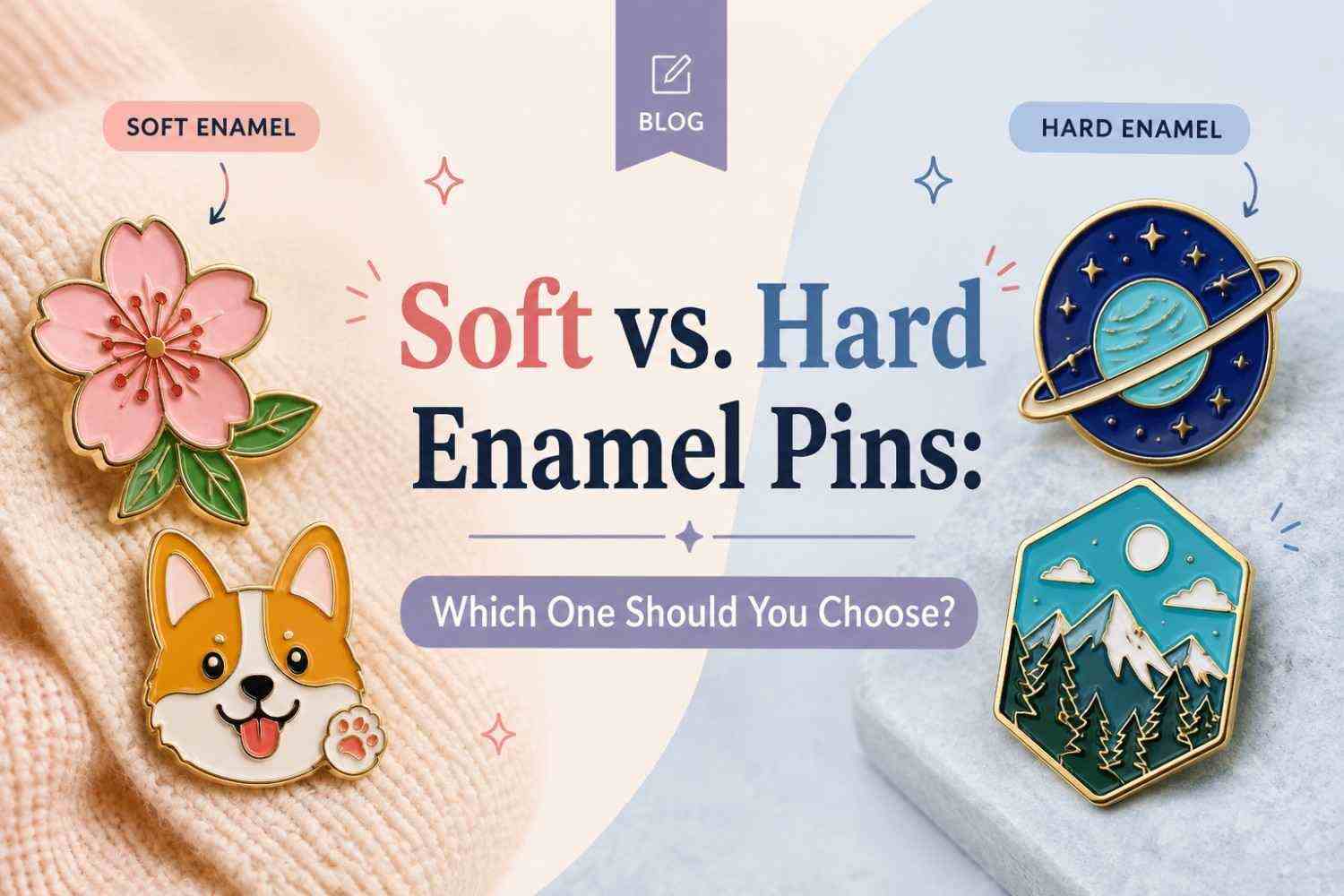
Soft vs. Hard Enamel Pins: Which One Should You Choose?
Most people ordering their first Enamel Pins don’t realize there are two very different ways to make one. You pick your artwork, choose your colors, and then somewhere in the process, someone asks: soft enamel or hard enamel? It’s a small decision that actually changes how your pin looks, feels, and holds up over time.
This isn’t about one type being better than the other. It’s about which one fits your design, your budget, and how the pin is going to be used. Once you understand the real differences, the choice gets a lot easier to make.
What Makes Soft and Hard Enamel Different
The difference comes down to one step in the production process: polishing.
Raised and Textured
In a soft enamel pin, colored enamel is added into the recessed sections of the metal mold and baked once to set it. The metal lines stay raised above the color, so you can actually feel the outline of the design when you run your finger over it.
Flat and Polished
A hard enamel pin skips that raised texture. Each color is overfilled into the mold and baked separately, so a five-color design gets baked five times before the surface is ground down and polished flat. That’s what gives a custom enamel pin its smooth, glass-like finish instead of a textured one.
From here, that one production difference is what shapes everything else: how much detail the design can hold, what it costs, and how long it lasts.
The Design Detail They Can Handle
Your artwork itself can point you toward the right choice. Once you polish a pin flat, very fine lines start to lose their sharpness, and that’s the main thing separating what soft and hard enamel can handle well.
Soft enamel holds up better with:
· Text smaller than 5 pt or thin script fonts
· Designs with delicate outlines close together
Hard enamel works best with bold, simple shapes and clean logos, since there’s no polishing step to soften the fine edges. If your design leans detailed, soft enamel keeps it readable. If it’s bold and graphic, hard enamel makes it look sharper.
The Price Difference
Cost is usually the deciding factor once the design is settled, and the two types aren’t priced the same way.
Lower Cost, Faster Turnaround
Soft enamel skips the extra polishing rounds, so it takes less time to produce. That makes it the more budget-friendly option, especially when you’re ordering pins in bulk for an event or giveaway.
Higher Cost, More Labor
Hard enamel needs multiple rounds of baking and a full polishing pass before it’s done. That extra labor adds up, so hard enamel pins typically cost noticeably more per unit than soft enamel ones, sometimes by a wide margin depending on the design.
The Durability Difference
This is the one most buyers care about, since a pin only stays good if it survives daily wear.
Hard enamel holds up better on its own. The baked and polished finish resists scratches and fading, which is why it’s the common pick for pins that get worn often, like on jackets or bags.
Soft enamel isn’t fragile, but the recessed enamel is more exposed to scratching over time. A few ways to close that gap:
· Add an epoxy coating for a smooth, protective layer
· Keep it for lighter use, like on lanyards or displays, if left uncoated
If long-term wear matters most, hard enamel needs less upkeep to stay looking new.
Soft Enamel vs. Hard Enamel: Quick Compare
If you just want the summary without reading through each section again, here’s how soft and hard enamel compare at a glance.
| Soft Enamel | Hard Enamel | |
| Texture | Raised metal lines, recessed color | Flat, polished, glass-like finish |
| Cost | Lower, faster to produce | Higher, more labor involved |
| Design Detail | Handles fine lines and small text well | Best for bold, simple shapes |
| Durability | Solid, better with epoxy coating | Scratch and fade resistant on its own |
Picking the Right Material
The enamel type isn’t the only choice that affects how your pin looks. The metal plating underneath plays a role too.
Soft enamel allows more freedom here, since the plating can be dyed in custom colors, not just standard gold or silver. Hard enamel is more limited, restricted to shiny finishes like gold, silver, or black nickel, since anything else would get affected during polishing.
When people ask about the best materials for custom pins, it usually comes down to matching plating with enamel type: soft enamel for creative, colored metal finishes, and hard enamel when you want a clean, classic metallic look.
Keeping It Looking New
Whichever type you choose, a little care keeps it looking new for years.
· Keep it away from perfume, lotion, and other chemicals, since they can dull the finish over time
· Wipe it gently with a soft, dry cloth after wearing
· Store pins separately so they don’t scratch against each other
· Remove uncoated soft enamel pins before showering or swimming
Knowing how to care for enamel pins isn’t complicated. A few small habits are usually all it takes to keep the color and shine intact.
Which One Should You Pick?
There isn’t a wrong choice here, only the one that fits what you actually need.
Choose Soft Enamel If
Your design has fine detail, small text, or thin outlines. It’s also the safer pick when the budget is tight or you’re ordering for the first time.
Choose Hard Enamel If
The pin needs to look premium and survive daily wear without much upkeep. The higher price pays for a finish that holds up on its own.
Match the pin to the design and how it’ll be worn, and the choice makes itself.
Conclusion
Soft and hard enamel both make solid, long-lasting pins. The real difference comes down to texture, cost, and how well each one handles your design and daily wear. Soft enamel gives you flexibility and a lower price. Hard enamel gives you a premium finish that holds up on its own.
Once you know what your design needs and how the pin will be worn, picking between the two becomes an easy call.
Frequently Asked Questions
Q/A: Is soft enamel or hard enamel better?
Answer: Neither is better overall. Hard enamel is smoother, more durable, and has a premium finish, while soft enamel is more affordable, holds finer detail, and allows more custom metal finishes. The right one depends on your design and budget.
Q/A: Are soft enamel pins cheaper than hard enamel pins?
Answer: Yes. Soft enamel pins typically cost 15% to 40% less than hard enamel, since the production process needs less labor and skips the extensive polishing stage.
Q/A: Does soft enamel scratch more easily than hard enamel?
Answer: Yes, slightly. The recessed enamel on soft enamel pins is a bit more exposed, so it can wear down faster with daily use unless it’s coated with epoxy for extra protection.
Q/A: Will enamel pins rust?
Answer: Enamel pins can rust if the base metal is iron or steel and gets exposed to moisture over time. The colored enamel itself won’t rust, but the metal backing or posts can if the plating wears thin.
Q/A: Why do hard enamel pins cost more to make?
Answer: Hard enamel pins go through extra rounds of baking and a full polishing pass to get that smooth, flush finish. That added labor and time is what drives up the price compared to soft enamel.

I am a professional blog writer at pinbadges.com.au. I love to cover custom pin design trends, corporate branding tips, and the craftsmanship behind lapel pins, hat pins, and challenge coins. I enjoy writing about how small accessories can make a big impact for brands, teams, and events across Australia. In my free time, I explore local design studios and keep up with the latest in custom merchandise trends.